
Get rid of plastic
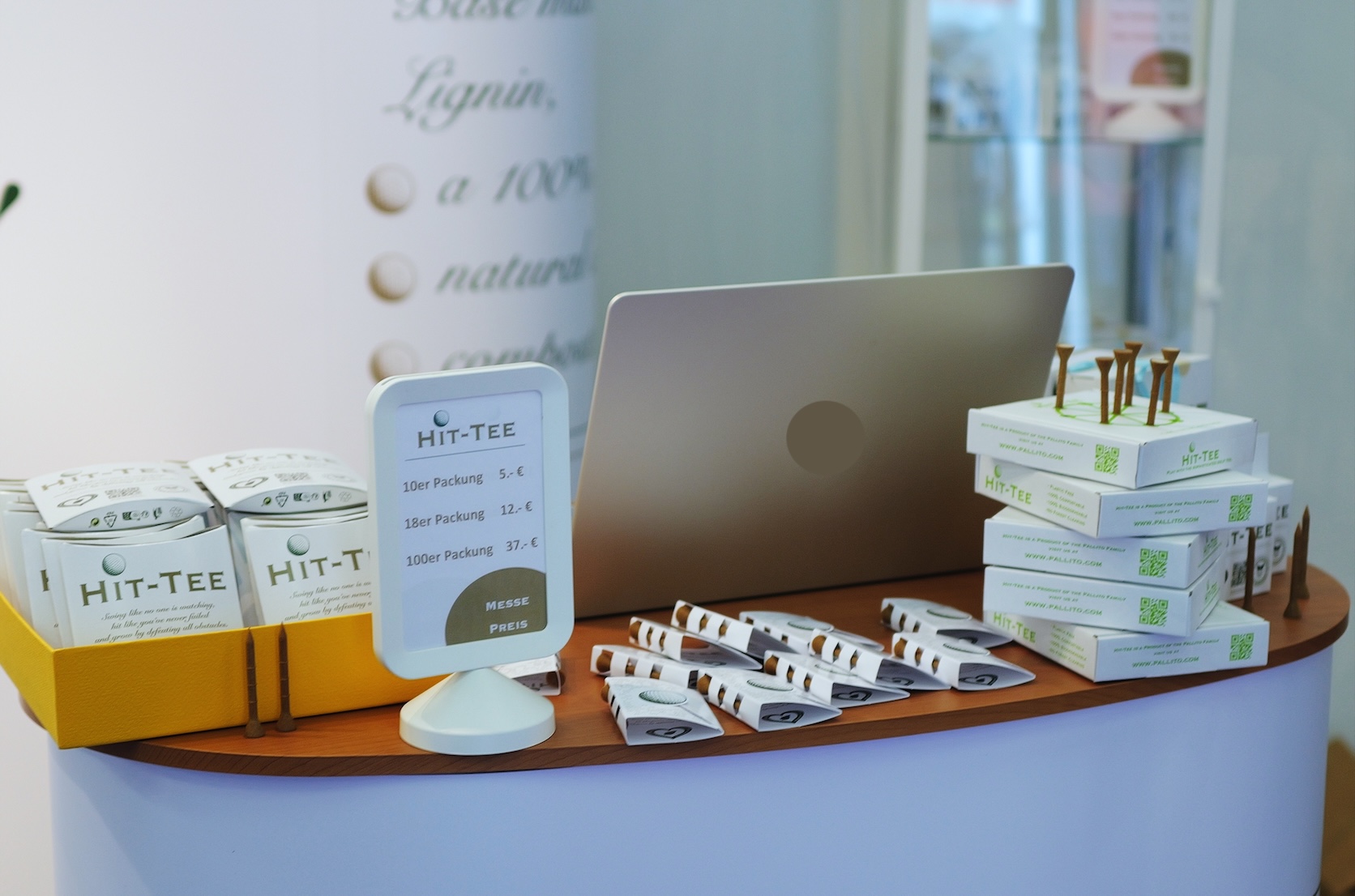
The sustainability trend reaches golf.
At this year’s Munich Golf Days (https://www.golftage-muenchen.com), we had many exciting discussions with visitors, golf clubs, and industry representatives. In addition to topics such as sustainability and innovation, one issue came up particularly often: the possible ban on plastic golf tees. ⛳🌍
What was long considered a marginal issue is increasingly becoming a serious topic of discussion in golf.
The trend: moving away from plastic 🚫
The move towards banning plastic tees shows that environmental issues are being taken seriously in golf 🌱. From individual clubs to more environmentally friendly courses, there is a growing awareness that even small products such as tees can make a long-term contribution to conserving nature and resources (https://golfsustainable.com/dgv-unterzeichnet-green-sports-manifesto/).
But the search for meaningful alternatives also shows that simply saying “no plastic” is not enough. Sustainable solutions must be thought out comprehensively – from raw material extraction to production and disposal. ♻️. New approaches show that creativity and awareness of ecological processes can open up ways that are less harmful to the environment.
This development is an example of how tradition and progress can go hand in hand in golf—without losing sight of the environment. 🌍.
But are the alternatives really better? 🤔
With growing pressure on plastic, sales figures for alternative materials are also rising. But a closer look reveals that not every alternative is automatically sustainable.
Bamboo-Tees 🌿
Bamboo is considered a fast-growing raw material. However, its cultivation—especially on a large scale—requires considerable amounts of water. 💧. Transport routes also play a role in the life cycle assessment.
Wood-Tees 🌲
Wood is biodegradable and natural. At the same time, trees are
So the question is not just: No plastic?
But rather: Which material has the least overall impact on the environment?

A new approach: golf tees made from lignin ♻️
This is exactly where Hit-Tee comes in. Instead of cultivating new raw materials or specifically felling trees, the material is based on lignin—a natural component of wood that is produced as a by-product or waste product during paper and wood processing.
The approach thus follows a different principle:
- Nutzung eines vorhandenen Reststoffs
• Reduzierung zusätzlicher Ressourcenentnahme
• Alternative zu erdölbasiertem Kunststoff